
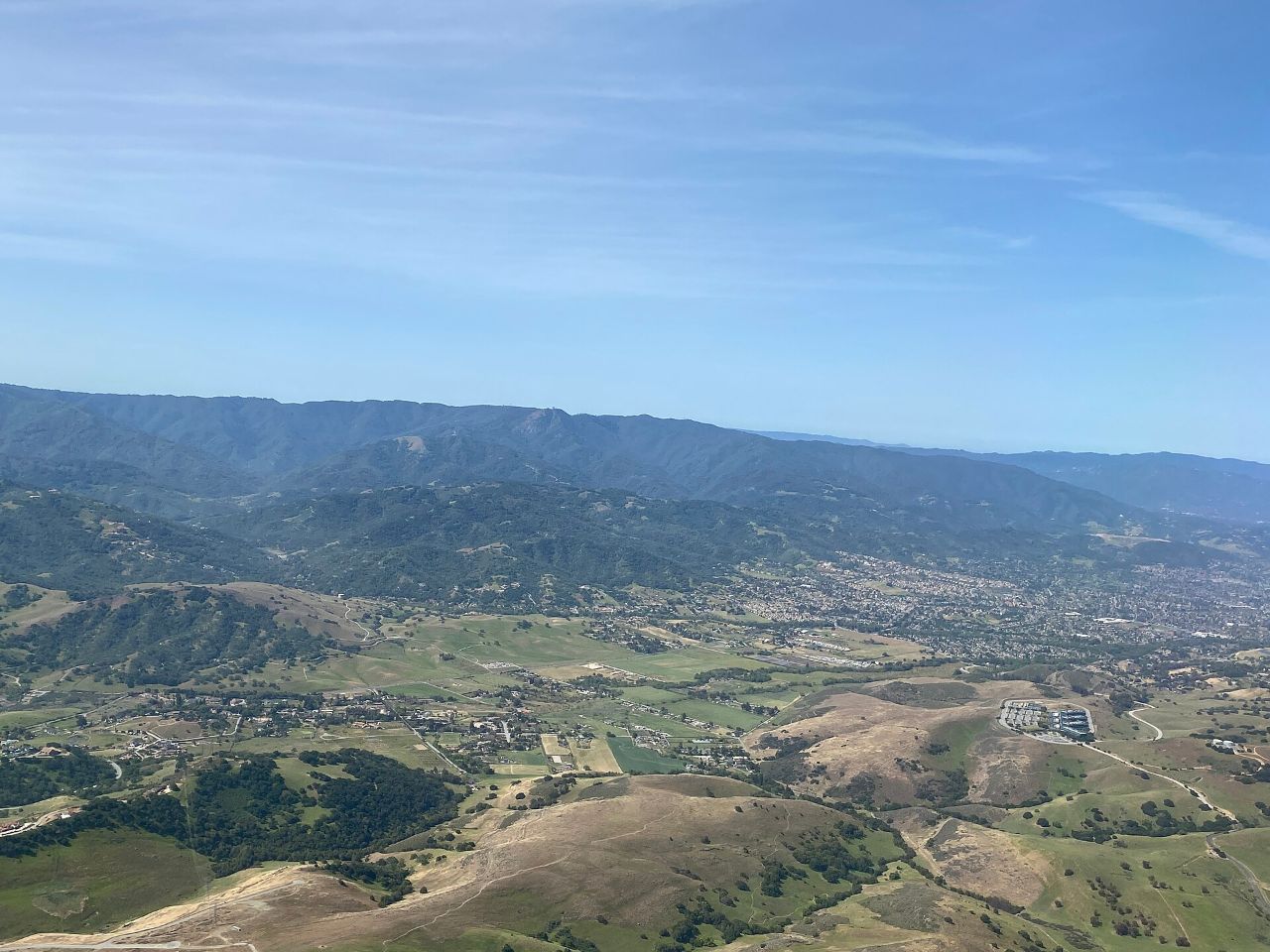
Mountain living in the Santa Cruz Mountains
The Santa Cruz Mountains run along the coast from San Mateo County through Santa Cruz County and the Santa Clara County side above Los Gatos and Saratoga. On the Santa Cruz side, most mountain homes are in the San Lorenzo Valley towns along Highway 9 (Felton, Ben Lomond, Brookdale and Boulder Creek), in Bonny Doon above the coast, around Scotts Valley, and up toward the Summit along Summit Road and Skyline Boulevard.
Homes on the Los Gatos side of the summit are in Santa Clara County, with their own county rules, schools and prices. Many buyers look on both sides of Highway 17 before choosing; this guide covers the Santa Cruz County side, where the rules below apply.
People move here for the redwoods, quiet and space: Henry Cowell Redwoods State Park is in Felton, and Big Basin Redwoods State Park, California's oldest state park, is above Boulder Creek. The trade-offs are longer drives, winding roads, more upkeep and the rules below. Highway 17 links Scotts Valley to Los Gatos and Silicon Valley, and downtown Santa Cruz and Monterey Bay are 15 to 30 minutes from most of the valley towns.
Santa Cruz Mountains, CA homes for sale and prices by town
Mountain homes range from small cabins on a few thousand square feet of land to custom homes on several acres. Most are single-family homes, with few condos. Prices vary a lot from town to town:
| Town | Median sale price | vs. a year ago | Days on market |
|---|---|---|---|
| Boulder Creek | $741,984 | +9.9% | 35 |
| Ben Lomond | $796,946 | -34.4% | 25 |
| Felton | $985,315 | +7.1% | 16 |
| Brookdale | About $1.0M (few sales) | +27.3% | 68 |
| Scotts Valley | $1,166,189 | -2.4% | 40 |
| Bonny Doon | About $1.7M (few sales) | +28.8% | – |
Redfin housing market data, all home types, three months ending October 2026. Small towns have few sales, so one sale can move the median a lot.
Boulder Creek, Ben Lomond and Felton: what mountain homes are like
Expect variety. You will see small redwood cabins under 1,000 sq ft with a wood stove, hillside homes with decks tucked among towering redwood trees, ridge-top homes with Pacific Ocean or Monterey Bay views, and homes on acreage with room for horses, gardens or an ADU. When you compare listings, look at the sqft of the living space, the size of the lot and how the home is reached, since a steep shared driveway or a long private road changes daily life.
Each community guide has a live listings window with every home for sale from the MLS, plus schools and a map. You can also search all homes for sale in Santa Cruz County, and a local real estate agent who works in the mountains can tell you which listings have well, septic or road issues before you tour. When you find a listing you like, compare the price per square foot, the lot size in acres and the condition of the septic system and well, not just the asking price.
Septic systems
Since July 1, 2023, Santa Cruz County has required a septic tank inspection report when a property on a septic system is sold. The main points, from the county's Environmental Health division:
- The seller arranges the inspection before close of escrow and is responsible for any repairs the county requires.
- The pumping report must be done within 12 months before close of escrow and include a flow test of the leach field of at least 250 gallons, measured with a flow meter.
- Failures or structural defects must be corrected under an Environmental Health permit, ideally before closing. A buyer can agree to take on the repair with a Transfer of Responsibility form, and the work is then due within 90 days of closing.
- Homes on enhanced treatment systems need an inspection report from an approved service provider dated within 6 months of closing, and the new owner must sign a service agreement with an approved provider.
- There are exemptions, including homes on public sewer, systems installed under permit within the last 5 years, and systems repaired or upgraded under permit within the last 3 years.
As a buyer, read the report closely. Ask how old the system is, where the leach field is, and whether anything is built over it. A septic replacement on a steep or tight mountain lot can be a major expense.
Wells, springs and creek water
Since September 1, 2025, a home that gets its drinking water from its own well, spring or stream diversion must have that water tested before it is sold. The county requires:
- A yield test, which measures how much water the source produces, typically over 3 hours.
- A test for total coliform bacteria.
- Tests for the inorganic contaminants listed in the county code, such as arsenic, nitrate and fluoride.
- Extra tests in some areas, such as hexavalent chromium for wells south of Valencia Creek, and chloride, conductivity and dissolved solids for wells in the Coastal Zone.
Results less than three years old can be reused if the earlier testing met the code. The seller gives the results and a disclosure form to the buyer and the county. The county's guidance focuses on disclosure: if a contaminant is above the standard, that can be recorded on the deed so future owners know about it. The county also keeps a map of areas known for low well yield.
As a buyer, read the yield number as carefully as the water quality. A low-producing well can mean storage tanks, careful water use in late summer, or trucked water. If the home shares a well or water system with neighbors, ask for the written sharing agreement.
Wildfire zones and disclosures
The 2020 CZU Lightning Complex fire burned 86,509 acres in Santa Cruz and San Mateo counties and destroyed 1,490 buildings, with heavy losses around Boulder Creek, Bonny Doon and along Empire Grade. It is a big reason fire is part of every mountain home purchase.
CAL FIRE maps fire hazard severity zones. On the state-responsibility maps, much of unincorporated Santa Cruz County is rated high, with very high zones near Boulder Creek and along Freedom Boulevard, and moderate zones in Felton, Ben Lomond and Soquel. CAL FIRE's 2025 maps for more urban local areas rate places like Scotts Valley, La Selva and the Aptos Hills as high.
What that means when you buy:
- Sellers in high and very high zones must disclose the fire hazard zone.
- Since July 1, 2021, sellers of homes in high or very high zones must give the buyer documentation that the property complies with defensible space rules, where a local ordinance or inspection provides it. If the seller has not, the buyer and seller sign an agreement and the buyer takes on getting it, within one year of closing where no local ordinance applies.
- Some mountain neighborhoods take part in the Firewise USA program, where neighbors work together to lower fire risk. Ask whether the area has an active group.
- State law generally requires defensible space of up to 100 feet around structures in these areas. Check the vegetation around the home and the condition of the roof, vents and gutters.
Homeowners insurance
Insurance can be the hardest part of buying in the mountains. Homeowners in fire-prone areas, including Scotts Valley, have reported carriers dropping coverage. The California FAIR Plan is the state's insurer of last resort for basic property coverage when a regular policy is not available, and owners often add a separate "difference in conditions" policy for coverage it does not include.
- Get quotes as soon as you are serious about a home, before you remove your contingencies.
- Ask the seller who insures the home now and what it costs.
- Ask an insurance agent which home hardening steps lower the premium, such as a fire-resistant roof or ember-resistant vents.
Other things to check
- Roads and access. Many mountain homes sit on private roads. Ask whether there is a road maintenance agreement and what owners pay toward it.
- Slope and drainage. Ask about past slides, retaining walls and drainage, and consider a geologic review on steep lots.
- Permits. Compare the home with county permit records, especially for additions, decks and second units.
- Utilities. Check internet options, cell coverage and whether the home has backup power.
This guide is general information, not legal or insurance advice. Rules change, so confirm current requirements with Santa Cruz County Environmental Health, your fire agency and your insurance agent.